A Comprehensive Guide to Trezor Login: Securely Accessing Your Crypto Assets
Trezor hardware wallets are renowned for their robust security features, offering a reliable way to store and manage cryptocurrencies offline. Logging into a Trezor wallet involves more than just entering a username and password; it’s about ensuring your digital assets remain protected from online threats. This guide provides a detailed, step-by-step explanation of how to log in to your Trezor wallet, the role of PINs and passphrases, and best practices for maintaining security. Whether you’re a beginner or an experienced crypto user, understanding the Trezor login process is essential for safeguarding your funds.
What is Trezor and Why is Login Security Critical?
Trezor, developed by SatoshiLabs, is a hardware wallet designed to keep your cryptocurrency private keys offline, protecting them from hacks, malware, and unauthorized access. Unlike software wallets, Trezor stores your private keys in a secure, isolated environment, only interacting with the blockchain when you initiate a transaction. The login process is a critical step in accessing your funds, as it ensures that only you can unlock your wallet and authorize transactions.
The Trezor login process is multi-layered, involving a physical device (Trezor One, Trezor Model T, or Trezor Safe series), a PIN, and optionally a passphrase. These layers work together to prevent unauthorized access, even if your device or recovery seed is compromised. With over 2 million users and a decade of experience in Bitcoin security, Trezor emphasizes user control and privacy, making the login process a cornerstone of its security model.
Setting Up Your Trezor for First-Time Login
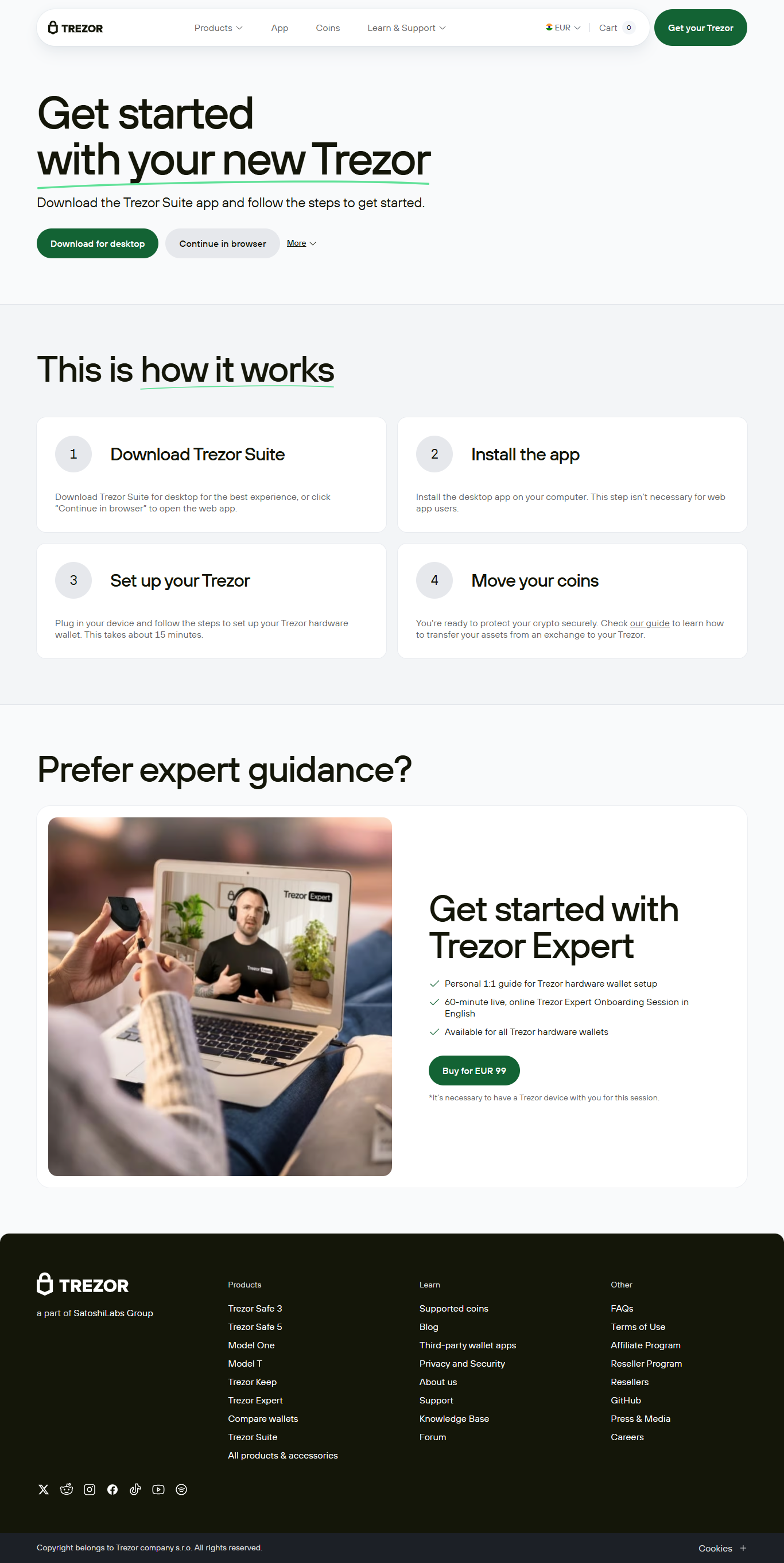
Before you can log in to your Trezor wallet, you need to set it up. Here’s a quick overview of the setup process, which is necessary for first-time users:
- Unbox and Verify Your Device: Ensure your Trezor device (e.g., Trezor One, Model T, Safe 3, or Safe 5) is genuine by checking for tamper-evident seals and holographic stickers. If anything seems suspicious, contact Trezor support immediately.
- Install Trezor Suite: Download the Trezor Suite app from suite.trezor.io or use Trezor Connect for browser-based access. Verify the software’s PGP signature to ensure it hasn’t been tampered with.
- Connect Your Trezor: Plug your Trezor into your computer or mobile device via USB. Follow the on-screen prompts to install firmware if it’s a new device.
- Create a Wallet Backup (Recovery Seed): During setup, Trezor generates a recovery seed (12, 20, or 24 words, depending on the model). Write this down on the provided seed card or a secure medium like the Trezor Keep Metal. Never store it digitally, as this increases the risk of theft.
- Set a PIN: Choose a strong PIN (up to 9 digits for Trezor One, or a grid-based PIN for Model T and Safe series). This PIN is required every time you log in or authorize a transaction.
- Optional Passphrase: You can enable the passphrase feature for additional security, creating hidden wallets tied to your recovery seed. More on this later.
Once set up, your Trezor is ready for secure login.
The Trezor Login Process: Step-by-Step
Logging into your Trezor wallet is straightforward but requires attention to security. Here’s how to do it:
- Connect Your Trezor Device: Plug your Trezor into your computer or mobile device. Open Trezor Suite or a compatible application like Trezor Connect.
- Enter Your PIN: When prompted, enter your PIN using your computer (for Trezor One) or the device’s touchscreen (for Model T or Safe series). The PIN protects your device from unauthorized access. For added security, Trezor One scrambles the PIN pad layout each time, preventing keyloggers from capturing your input.
- Access Standard Wallet: After entering the PIN, Trezor Suite loads your standard wallet, which is derived from your recovery seed. You can now view balances, manage accounts, or initiate transactions.
- Access Hidden Wallets (Optional): If you’ve enabled the passphrase feature, you’ll be prompted to enter it after the PIN. Each unique passphrase creates a separate hidden wallet tied to your recovery seed. Enter the passphrase exactly as set, as it’s case-sensitive and spaces matter.
- Confirm Actions on Device: For transactions or sensitive actions, Trezor requires on-device confirmation. Verify the details on your Trezor’s screen (or touchscreen for Model T/Safe) to ensure they match your intent. This protects against man-in-the-middle attacks.
Understanding Passphrases and Hidden Wallets
A passphrase is an optional security feature that adds an extra layer of protection to your Trezor wallet. Often referred to as the “25th word” (or 13th for 12-word seeds), a passphrase is a user-defined word or phrase (up to 50 ASCII characters) that, when combined with your recovery seed, creates a unique hidden wallet. Here’s how it works:
- Standard Wallet: Using only your recovery seed (12, 20, or 24 words) grants access to your standard wallet.
- Hidden Wallet: Adding a passphrase to your seed creates a new wallet. Each unique passphrase generates a distinct hidden wallet, allowing you to manage multiple wallets under one seed.
For example, if your seed is 12 words and you add the passphrase “I eat purple grapes,” Trezor generates a new set of private keys for a hidden wallet. A different passphrase, like “hello world,” creates another unique wallet. Passphrases are case-sensitive, and even a single typo results in a different (likely empty) wallet.
Passphrase Best Practices
- Choose a Strong Passphrase: Use a memorable but complex phrase (e.g., multiple words like “sunset ocean breeze”). Avoid simple words like “password” for better security.
- Write It Down: Record your passphrase on paper or a durable medium like Black Seed Ink’s cold storage wallet. Store it separately from your recovery seed. Never store it digitally.
- Memorize If Possible: For advanced users, memorizing the passphrase adds security but carries the risk of forgetting it. If youRisks of Forgetting Passphrase Forgetting your passphrase means losing access to the associated hidden wallet permanently, as it’s not stored on the Trezor device. There’s no way to recover a forgotten passphrase, so secure storage is critical.
Managing Multiple Accounts in Trezor Suite
Trezor Suite allows you to manage multiple accounts for each supported cryptocurrency, enhancing privacy by keeping transactions separate. Each account has a unique extended public key (XPUB), ensuring that transactions from different accounts don’t mix, which protects your privacy. You can create new accounts for specific purposes (e.g., savings, spending) via Trezor Suite’s interface.
To create a new account:
- Log in to Trezor Suite with your device connected.
- Navigate to the “Accounts” section.
- Select “Add Account” and choose the cryptocurrency.
- Confirm the action on your Trezor device.
This feature is useful for organizing your crypto holdings and maintaining transaction privacy.
Advanced Security: Shamir Backup and Multi-Share
For users seeking enhanced security, T Trezor Safe 5 and Safe 3 support SLIP39, a Shamir Backup scheme that splits your recovery seed into multiple shares (e.g., 2-of-3). This allows you to recover your wallet even if one share is lost, increasing resilience against loss or theft. You can set this up during wallet initialization or later via Trezor Suite.
Troubleshooting Common Login Issues
- PIN Issues: If you enter the wrong PIN multiple times, your Trezor may lock temporarily. Wait and try again, or reset the device using your recovery seed (which erases the PIN but not your funds).
- Passphrase Errors: If you can’t access a hidden wallet, double-check for typos, as passphrases are case-sensitive. Use the “eye” icon in Trezor Suite to verify input. If the passphraseస: passphrases are not stored on the device, so a forgotten passphrase is unrecoverable.
- Connection Problems: Ensure your device is properly connected and the cable is functional. Try a different USB port or cable if necessary.
Security Tips for Trezor Login
- Use a Trusted Computer: Avoid logging in on a potentially compromised computer to prevent keylogging or malware risks.
- Enable Passphrase Protection: Use a strong passphrase for hidden wallets to add an extra layer of security, even if your seed is compromised.
- Regular Backups: Regularly verify your recovery seed and passphrase backups to ensure you can recover your wallet if needed.
- Update Firmware: Keep your Trezor’s firmware updated for the latest security patches via Trezor Suite.
Conclusion
The Trezor login process is designed to maximize security while providing user-friendly access to your cryptocurrency. By combining a physical device, PIN, and optional passphrase protection, Trezor ensures your funds remain safe from online and offline threats. Understanding the importance of your recovery seed, passphrase, and proper storage practices is key to maintaining control over your assets. With features like multiple accounts, Shamir Backup, and durable storage solutions like Trezor Keep Metal, Trezor offers a robust ecosystem for secure crypto management. Follow these steps and best practices to confidently log in and manage your digital wealth.
Made in Typedream